ScopeBid iconSolo Work ToolsPricing words

Updated November 2026

Estimate, Quote or Bid?

For trades sending prices by phone: tick what's true about this job and see which word fits.

Tick any that apply. The ring fills as you go.

Download on the App StoreFree on iPhone · Try it tonight

What is the difference between an estimate, a quote and a bid?

An estimate is your best guess at the price and can change. A quote is a fixed price that binds both sides once the customer accepts it. A bid is a price you submit in competition, usually against written specs, to win the job. Same numbers, different promises.

Consumer NZ's guide to quotes and estimates puts it plainly: "A quote is an exact price for a job and it's binding on both parties once accepted," while estimates "are approximate prices." In U.S. government buying, a formal bid has a precise meaning: the Federal Acquisition Regulation's Part 14 describes sealed bidding as competitive bids, a public opening, and an award to the responsible bidder whose conforming bid is most advantageous on price.

Summary: estimate = range you can revise; quote = price you keep; bid = price you compete with.

Estimate vs quote vs bid, side by side

Estimate

A best guess you can revise

Use it when you haven't seen everything yet: rot behind the drywall, a lawn you only know from photos, a customer still deciding on finishes.

Binding?
Not as a fixed price; explain what could move it
Best for
Early conversations, unknown conditions
Risk
Customer anchors on the low end

"This is an estimate based on what we can see today. The final price may change if hidden conditions are found; we'll ask before doing extra work."

Quote

A fixed price you stand behind

Use it when you've measured, the scope is settled and you know your costs. Give it an expiry date so materials prices can't catch you out.

Binding?
Yes, once accepted
Best for
Defined jobs, repeat work you've priced before
Risk
You absorb overruns you didn't scope

"Fixed price for the work listed below. Valid for 30 days. Extra work is priced separately by written change order."

Bid

A price that competes

Use it when an owner, manager or agency sends the same specs to several contractors and picks one, often on price.

Binding?
Usually, if accepted as submitted
Best for
Property managers, HOAs, public work
Risk
Winning on price you can't afford

"Bid submitted per the specifications dated [date]. Price includes all items listed; exclusions are noted below."

QuestionEstimateQuoteBid
Price can change?Yes, with noticeOnly by change orderOnly by change order
Who sets the scope?You, roughlyYou, preciselyThe buyer's specs
Needs an expiry?HelpfulYesSet by the buyer

Whatever you call it, write the scope, the price basis and how changes are handled.

Who should use something other than ScopeBid

  • Contractors answering formal public bids. Agencies usually require their own bid forms, bonds and submission portals. ScopeBid makes PDF quotes and invoices; it doesn't fill out bid packages.
  • Crews that need takeoffs from plans. If you measure from blueprints, a dedicated takeoff tool fits better.
  • Anyone needing accounting or tax filing. ScopeBid is an estimating and invoicing tool, not accounting or tax software; you set your own tax rates.

A quote customers can accept on the spot

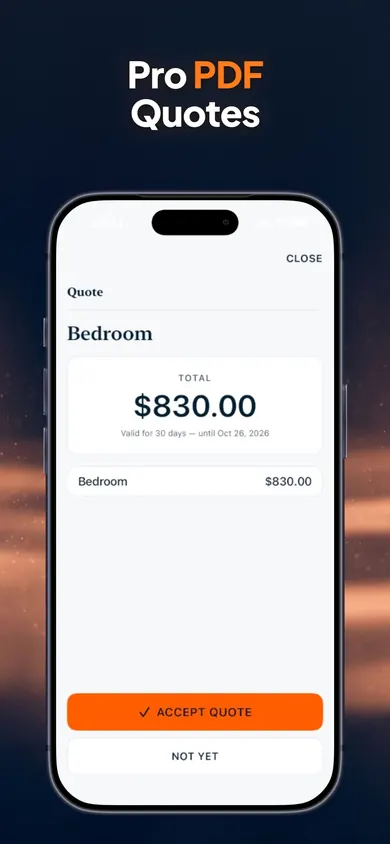
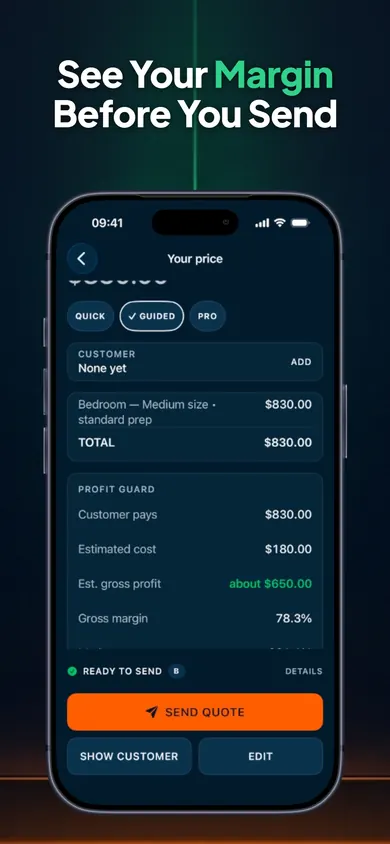
These are ScopeBid's App Store screenshots: a customer-facing PDF quote with a validity date, and Profit Guard showing margin before you send it.

ScopeBid customer PDF quote for a bedroom, $830 total, valid for 30 days, with an Accept Quote button
Valid for 30 days, printed on the quote.
ScopeBid Profit Guard showing customer pays $830, estimated cost $180 and gross margin 78.3% before sending
Cost and margin never print on the customer copy.

When an estimate should have been a quote

A painter walks a two-bedroom repaint, measures every wall and texts "should be around $2,400." The customer hears $2,400, flat. Two weeks later the final bill says $2,650 because of extra trim, and the job ends in an argument over a word.

The painter had everything a quote needs: a site visit, measurements, a settled scope. Sending a written quote of $2,600 with the trim listed, valid 30 days, would have cost ten more minutes and saved the relationship. Where the walls might hide water damage, the honest move is the reverse: send an estimate and say what could change it.

If you've measured it, quote it. If you can't see it, estimate it and say why.

Estimates, quotes and bids: quick answers

Is a quote legally binding?
Generally a quote accepted by the customer works as a fixed-price offer and acceptance, so both sides are held to it. Rules vary by country and state, so put the scope, price and expiry in writing.
Can I charge more than my estimate?
An estimate is approximate, so the final price can differ. Consumer NZ suggests customers question a bill well above the estimate. Tell the customer before you go over, and get extra work approved in writing.
Is a proposal the same as a bid?
Not quite. A proposal often includes approach, timeline and options along with price, and the buyer may weigh more than cost. A bid is usually judged mainly on price against fixed specs.
Do I need a written contract too?
Often, yes. California's licensing board, for example, says a written contract is required for home improvement projects over $500. An accepted quote with clear terms is a good start; check your state's rules.

Your header line, ready to paste

Use the checklist at the top. When the ring settles on a word, here is the sentence to put under your document title:

Tick at least one box above to get a line.

ScopeBid's PDF quotes carry your logo, terms and payment details. Your first 3 quotes are free, with full PDFs, and everything you create stays viewable and exportable.

Send the right document tonight

Start from a past job, check your margin with Profit Guard, and send a clean PDF quote from your iPhone, even with no signal.

Download on the App StoreFree on iPhone · Try it tonight

More free contractor guides