Does shift differential count toward overtime pay?
Yes. Under the federal Fair Labor Standards Act, a night or shift differential is part of your regular rate, and overtime is 1.5 times that regular rate, not 1.5 times your base wage. Your employer doesn't have to pay a differential at all, but once it does, the extra cents follow you into overtime.
NIGHT +$240+ HRS1.5 × REGULAR RATE
Two federal sources settle it. The Department of Labor's night work page says the FLSA "does not require extra pay for night work"; a differential is a matter of agreement. But the regular-rate rule at 29 CFR 778.207(b) says the Act "requires the inclusion in the regular rate of such extra premiums as nightshift differentials", whether paid as a percentage or a flat amount per hour.
YouMy night shifts pay $2 more an hour. My overtime is $27 an hour, which is 1.5 × my $18 base. Isn't that right?
The mathClose, but usually short. The DOL's Fact Sheet #56A (December 2019) says the regular rate is total pay for the workweek, minus a few exclusions, divided by total hours worked.
YouSo the $2 nights get averaged in?
The mathYes. 46 hours with 30 at night is $888 straight time. $888 ÷ 46 = $19.30 an hour. Overtime adds half of that, $9.65, for each of the 6 extra hours.
YouAnd the base-only way?
The math$942.00 instead of $945.91. Small per week, but $101.74 over 26 weeks like it.
One-line summary: the differential raises your regular rate, and overtime is half that rate on top for every hour past 40 in the workweek.
A week of night shifts, worked through
Picture a clinic tech on $34 an hour with a $4 night differential. One busy week runs 52 hours, 36 of them at night. Here is the federal method next to the base-only shortcut, worked out in code from those inputs:
| Line | Amount |
|---|
| Straight time: 52 × $34 + 36 × $4 | $1,912.00 |
| Regular rate: $1,912 ÷ 52 | $36.77/h |
| Overtime premium: 12 × ½ × $36.77 | $220.62 |
| Weighted total | $2,132.62 |
| Base-only total (40 × $34 + 12 × $51 + 36 × $4) | $2,116.00 |
| Difference that week | $16.62 |
The tech sends payroll a calm question, not an accusation, with the hours and the math attached. Payroll might use a different approved method, or might fix it next cycle. Either way, the record answers the question.
Shift differential and overtime: common questions
Is a shift differential required by law?
Not under federal law. The Department of Labor says extra pay for night work is a matter of agreement between employer and employee. Some union contracts and employer policies set one.
Does a weekend or holiday premium count toward overtime too?
It depends on the size. Fact Sheet #56A says a premium for Saturday, Sunday, holiday or day-of-rest work can be left out of the regular rate when it is at least 1.5 times the normal rate for like work. Smaller weekend premiums generally belong in the regular rate.
What if only some of my hours were nights?
Add the differential only for the hours that earned it, then divide the week's total straight-time pay by all hours worked. That weighted regular rate is what overtime is figured from.
Does this apply in Canada or every U.S. state?
This page covers the U.S. federal FLSA. States can add rules, such as daily overtime, and Ontario has its own 44-hour weekly rule. Check your state or provincial labour office for the rules where you work.
Can EarnCheck tell me if I was underpaid?
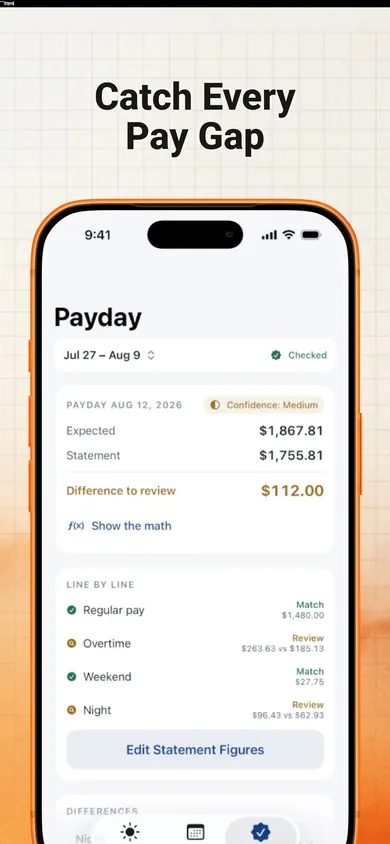
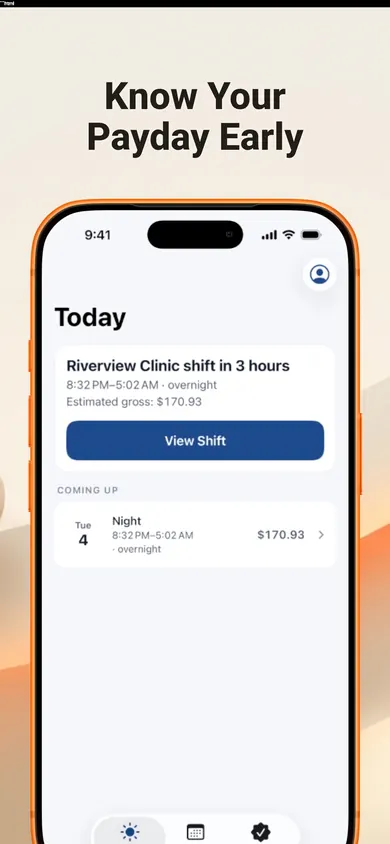
No. It estimates gross pay from the hours and rules you enter and marks lines to review. It never contacts your employer and is not legal advice.
 Solo Work Tools